

Smelt (Dried Salted Koryushka)
0.32 lb
Smelt (Koryushka): The Fish That Smells Like Cucumber
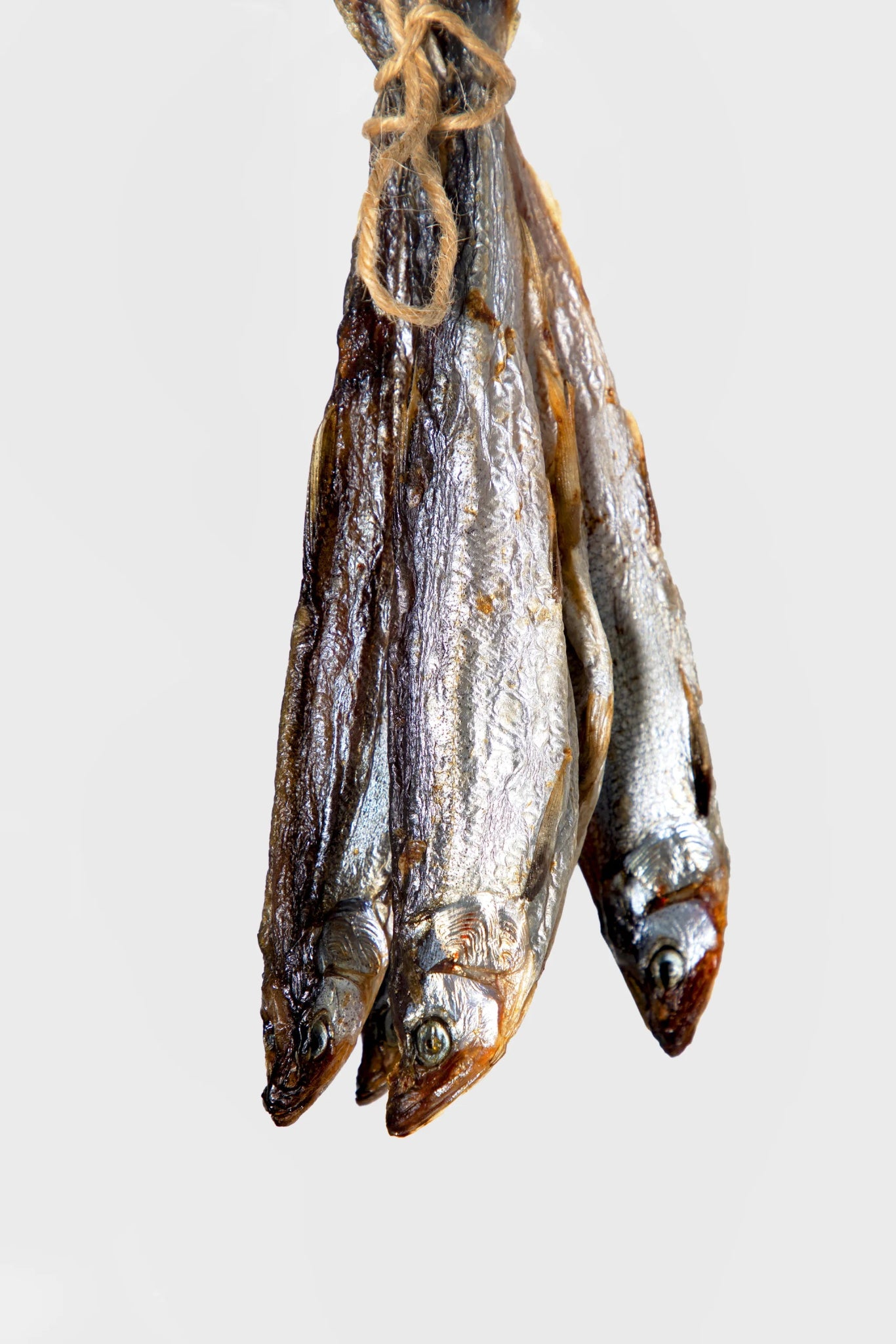
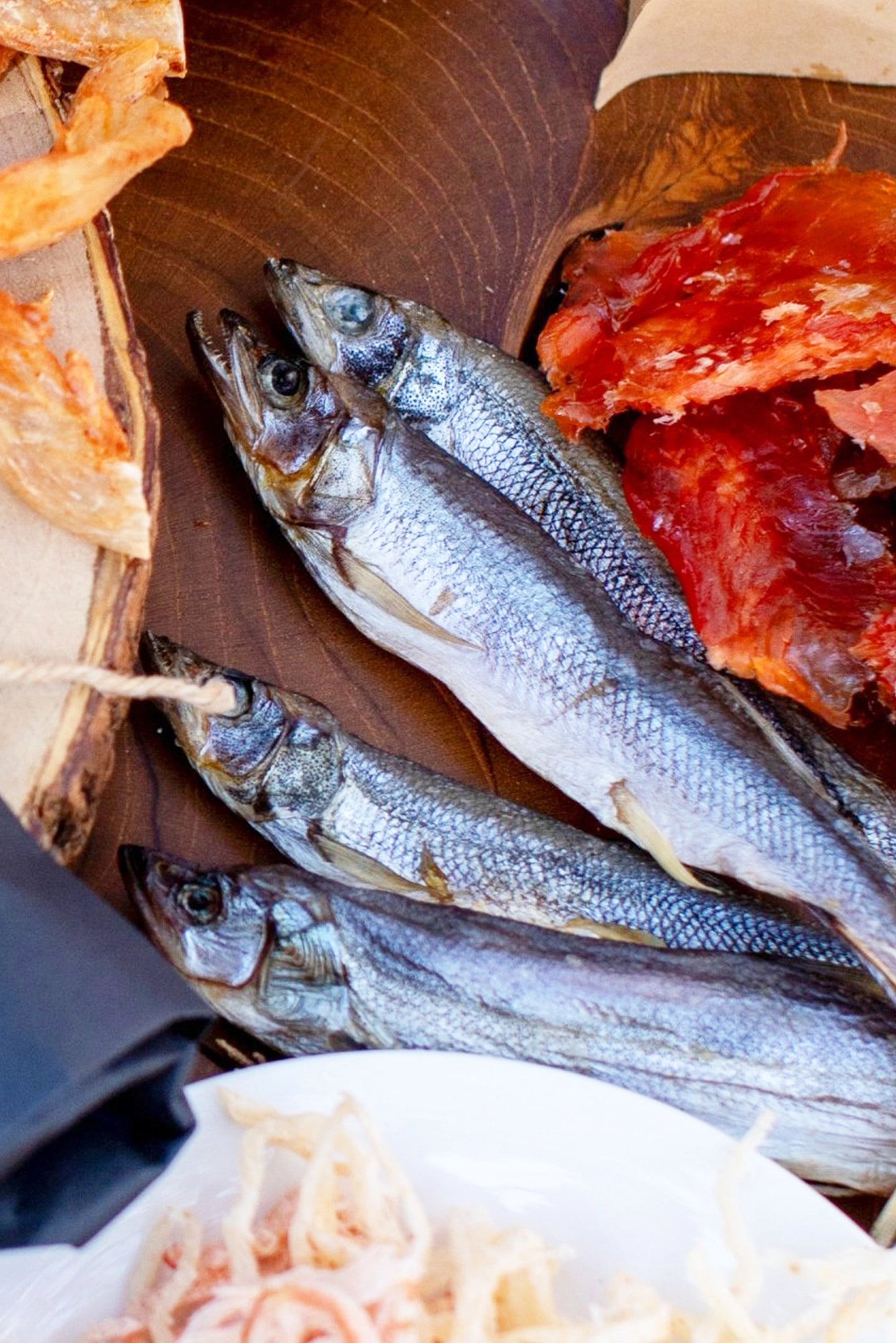
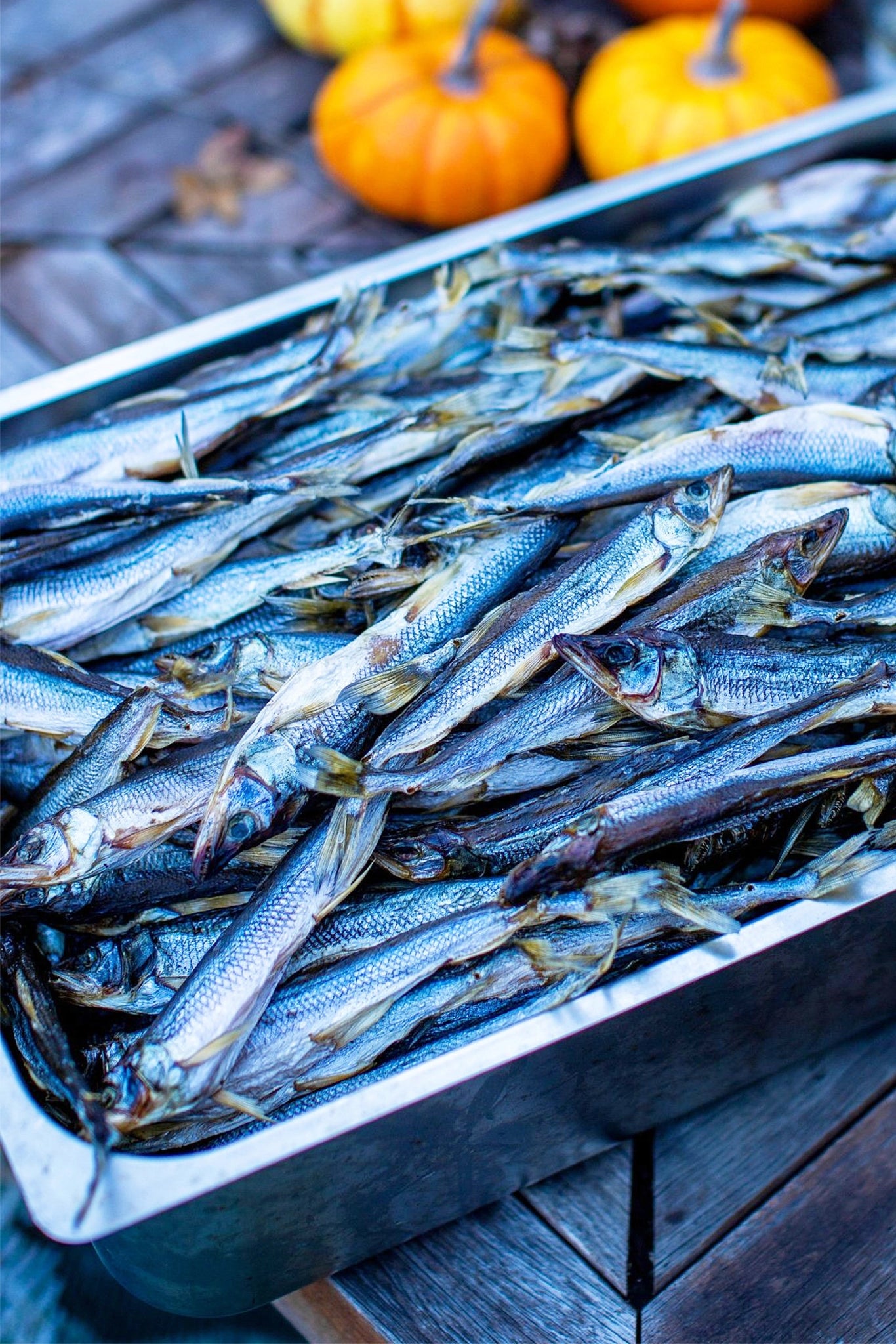
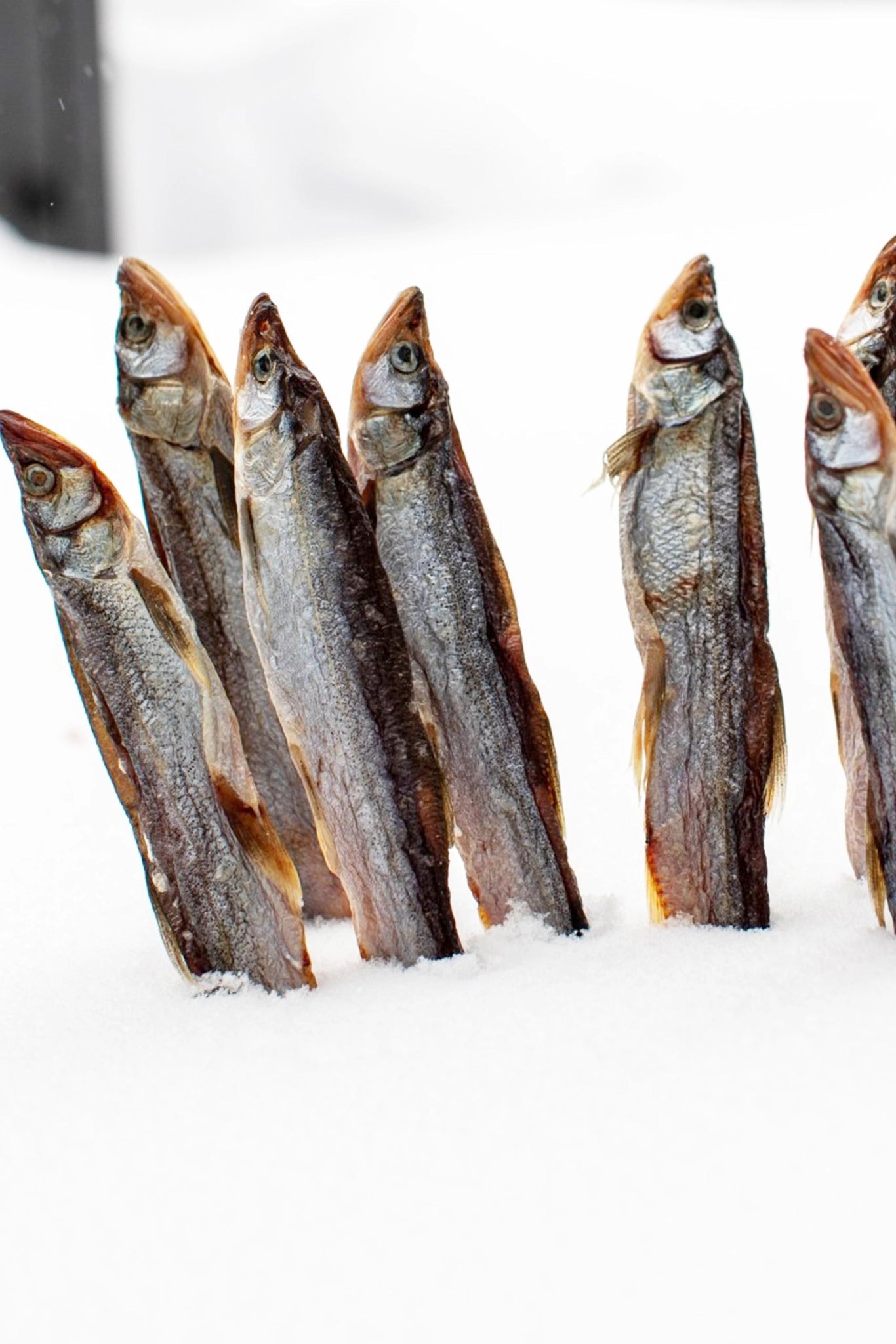
Fresh smelt famously smells of cucumber — that is not a metaphor, it is the first thing anyone notices, and it is how you know you have the real thing. Dried, it turns into something tender and faintly fatty, eaten whole with your hands: head, bones and all. This is the fish we grew up catching through the ice on Sakhalin, and the one that most reminds us of home.
Each fish runs 4 to 7 inches depending on the catch and the season. A pack holds roughly 8 pieces, 5.5 oz (150 g).

How We Make It
- Dried whole. Nothing is cut away. Smelt is small enough to eat entire, and drying it whole is what keeps it tender rather than papery.
- Lightly salted. A measured cure, traditional method. Heavy salting is what turns dried smelt into something you can only nibble.
- Air-dried for six days. Controlled temperature and humidity across nearly a week. Fast drying gives you a stiff, hollow fish; six days keeps the fat in.
- Nothing added. No preservatives, no dyes, no gluten.
Two Kinds, and How They Differ
We work with both, and they are genuinely different eating.
- Far Eastern smelt. Leaner and firmer, with a cleaner finish. The traditional one.
- Canadian smelt. Noticeably fattier and softer, with a richer mouthfeel.
Which one we have depends on the season. The type in stock is shown at checkout — and if you have a preference, leave a note with your order and we will match it when we can.
How to Eat It
- Whole, with your hands. Head, bones and all — the bones are soft enough after drying that they are part of the texture rather than an obstacle.
- With cold beer. The pairing this fish is known for, and the reason it exists on every table back home.
- Warmed briefly. A few seconds over a low flame or in a dry pan lifts the aroma considerably. Worth doing once to see the difference.
- Just the fillets, if you prefer. Pull the fish open along the spine and eat the sides. Less traditional, but nobody is watching.

Keeping It
Sealed and refrigerated at 32–39°F it keeps one to three months. Once opened, press the air out and reseal — dried smelt will not spoil quickly, but it stiffens as it dries further and the fat is what you paid for.
Fuller guidance is in our storage guide.
Common Questions
Do I eat the bones? Yes. Six days of drying softens them completely — this is a fish that goes in whole. If that is not for you, open it along the spine and take the fillets.
Does it really smell like cucumber? Fresh smelt does, strongly. Dried, it is fainter but still there, and it is the mark of a properly handled fish.
Is it very salty? Moderate. Salty enough to want a drink beside it, light enough that the fish comes through.
Is it cooked? Not with heat — salted and air-dried, which preserves it on its own. Ready to eat from the pack.
Which type should I pick? If you have never had it, take whichever is in stock. Once you know it, most people land on the Canadian for the fat or the Far Eastern for the cleaner taste.
Nutrition Facts
Serving Size 50 g
Amount Per Serving
| Calories 36 | Calories from Fat 5 |
| % Daily Value* | |
| Total Fat 0.6 g | 1% |
| Saturated Fat 0 g | 0% |
| Trans Fat 0 g | |
| Cholesterol 25 mg | 8% |
| Sodium 25 mg | 1% |
| Total Carbohydrate 2 g | <1% |
| Dietary Fiber 0 g | 0% |
| Sugars 2 g | |
| Protein 7 g | 14% |
Calcium 2% • Iron 2%
Vitamin D 4%
*Percent Daily Values are based on a 2,000-calorie diet.
Key Nutritional Highlights:
- High in protein: 7 g (14% DV)
- Very low in fat: 0.6 g (1% DV)
- Good source of Calcium, Iron & Vitamin D
- Rich in phosphorus & iodine for bone and thyroid health
- All-natural, lightly salted & traditionally air-dried