


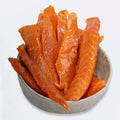

Skumbria is the Russian word for mackerel. In Russian and Polish grocery stores across the United States the smoked fish is labelled that way, in Latin letters, so people search for it the way they read it on the price tag: skumbria, skumbriya. Ours is Mackerel Melt, a smoked mackerel fillet with the bones pulled, made at our smokehouse in Los Angeles.
The Lithuanian kind is a whole fish in a vacuum bag, made to sit in a store cooler for months. Ours is a boneless fillet smoked over wood in small batches, and it keeps three weeks in the fridge.
What skumbria means
Скумбрия, skumbria, is mackerel. The fish sold under this name in Russian stores is Atlantic mackerel, Scomber scombrus: a slim, oily fish with dark stripes down the back and firm grey flesh. In the Soviet Union it was the everyday smoked fish, and for anyone who grew up there the smell still means a kitchen table and black bread.
The word crossed the ocean with the fish. Importers print the Russian name on the label because that is what their customers ask for, so a whole generation of shoppers from Brooklyn to Sacramento knows the fish as skumbria and has never needed the English word. That is why the spellings vary so much: skumbria, skumbriya, scumbria, scumbia. All of them are the same fish. If you have ever typed "скумбрия in english" into Google, the answer is mackerel.
Lithuanian smoked mackerel
Ask for skumbria in a Russian store and you will most likely be handed a whole smoked mackerel from the Baltic states: gutted, skin golden, sealed in a vacuum bag. A lot of it is made in Lithuania, so "Lithuanian mackerel" has become the name for the whole category.
It is an industrial product, and the technology follows from that. The fish is brined and smoked on a continuous line, then packed to survive a shipping container and weeks in a store cooler. The date on the pack is usually months out. Consistency is the goal: every fish in the case should look and taste like the one next to it.
How the smoke gets into the fish varies from plant to plant. Some producers smoke over wood. Others add smoke flavouring to the brine, which gives the colour and the taste without the hours in a smokehouse. Nobody can tell which pack is which from the outside. The ingredient list can. If it says "natural smoke flavour" or "liquid smoke", the smoke came from a bottle. We wrote a longer piece on telling the two apart: real smoke vs liquid smoke.
On the plate, a whole fish means work. You take off the skin, lift the flesh from the backbone, pick out the rib bones, and decide what to do with the head. The flesh is firm and holds together in a slab.
How we smoke mackerel
We start with the fillet. Each side is trimmed and pin-boned by hand before it sees any salt. Then a light cure: a measured amount of salt, enough to season and firm the flesh, and no more. Salt is for taste here, since the fish never has to sit in a warehouse.
The smoke is wood, low and slow. There is no smoke flavouring in the brine, because the brine is salt and spices and nothing else. The ingredient list reads: mackerel, salt, spices. No preservatives, no dyes. We make it in small batches and vacuum-seal it, and it keeps three weeks in the fridge unopened, three to five days once the pack is open. In the freezer at 0°F it holds for two months; thaw it in the fridge, never on the counter.
What that means on the plate: the fillet flakes into thick, moist chunks under a fork. There is no backbone to lift out and no skin to peel. You open the pack and eat. The flavour is wood smoke on a fatty fish, sharper at the edge of the fillet where the smoke sat longest, milder in the thick of the flesh.
How to eat smoked mackerel
The way it is eaten at home in Russia is still the way we eat it. Dark rye bread, a smear of hot mustard, a thick flake of mackerel on top. A ring of raw onion if you have one.
Pâté. Break half a fillet with a fork, mix with cream cheese, a squeeze of lemon and black pepper. Spread on toast or crackers.
Potatoes and onion. Boiled potatoes, still warm, raw onion sliced thin, mackerel in chunks on the side.
Beetroot. Grated boiled beetroot with a spoon of sour cream, mackerel on top. The sweetness cuts through the fat.
To drink: cold beer, or vodka if it is that kind of evening. We have a separate piece on which fish goes with which beer.
We are from Sakhalin, and smoked mackerel was ordinary food there. When we moved to Los Angeles, every version we found had crossed an ocean in a vacuum bag. We started smoking our own because we wanted the fish fresh from the smoker, and we pull the bones because that is the step that puts people off. A fillet takes a slice of rye and about a minute.
