


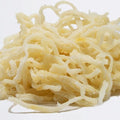
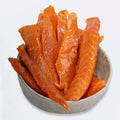

Yukola is two things at once. In its original sense it is wind-dried fish from the Russian Far East, made with little or no salt and kept for the winter. In Russian stores across the United States the same word is printed on packs of sweet, honey-glazed dried trout, which in English is called candied trout. If you typed "yukola" looking for the sweet kind, that is our Candy Bites: steelhead trout, marinated, rolled in honey and dried for a full day.
The savoury version, with sea salt and no honey, is Salty Bites. Same fish, same cut, same 24 hours in the dryer, a different finish. Below is how the two ended up sharing a name and how to tell which one you want.
What is yukola
The word belongs to the peoples of the Amur and Sakhalin, the Nanai and the Nivkh among them. They split salmon along the spine, hung the halves on wooden racks and let wind and sun do the rest. Salt was scarce, so most yukola had none. Smoke from a low fire under the racks kept the flies off and added a little flavour. The result was light and hard, and it kept through a winter with no refrigeration. That yukola is a staple food, closer to hardtack than to a snack.
We grew up on Sakhalin, where you can still see fish drying on racks behind houses in summer. Somewhere along the way the word crossed the ocean and changed jobs. Russian delis in the US needed a name for sweet dried trout that customers would recognise, and "yukola" was the word for dried fish that everyone already knew. The name stuck to the product. So today an American search for yukola almost always means candied trout.
Candied trout vs trout jerky
Both start as steelhead trout, marinated and dried. The difference is what goes on the surface and how much water is left inside.
Trout jerky is salt-forward. Salty Bites is seasoned with sea salt and marinade, dried for 24 hours, and comes out pale and tender with a clean savoury taste. There is no coating, so what you taste is fish and salt.
Candied trout takes the same marinated piece and rolls it in honey before drying. As the piece dries, the honey thickens and caramelises into a glaze that is sticky to the touch. The glaze seals the surface, so candied trout stays softer and moister than jerky dried for the same time. The taste arrives in two steps: honey first, then the salt of the marinade underneath.
Colour is the quick tell. Jerky is matte and pale. Candied trout is glossy and dark, with the deep red of the steelhead showing through the glaze.
Trout jerky and candied trout share the same fish and the same 24 hours of drying. Honey is the whole difference.
How candied steelhead trout is made
We start with red steelhead trout. The fillets are deboned by hand and cut into bite-sized pieces, small enough to eat in one go. The pieces go into a savoury marinade first. That layer is what keeps the finished product from tasting like a dessert.
After the marinade, each piece is rolled in farmer's honey. Then the trays go into the dryer for 24 hours at a controlled temperature. The number matters: too hot and the honey burns before the fish is done, too cold and the glaze never sets.
What comes out is boneless and sticky with glaze. The ingredient list is short: trout, honey, salt, spices. No preservatives and no dyes. Gluten-free. The colour comes from the fish and the caramelised honey, nothing else.
How to eat candied trout
The obvious way is straight from the pack. Beyond that:
- With cheese. Blue cheese is the pairing we put on the product page. Salt and mould against honey and fish works the way it works with figs.
- With white wine. A dry white cuts the sweetness. Sweet wine with sweet fish is too much of one thing.
- For children. The honey does the selling. Candy Bites is the piece to hand someone who says they do not like fish, and most often that someone is eight years old. The one caveat is the usual honey rule: none for babies under a year.
- Side by side. Put Candy Bites and Salty Bites on the same board. Guests pick one, then reach for the other.
How long candied trout keeps
Dried trout keeps one to three months in the fridge in its sealed pack. Once opened, reseal it and keep it cold; the glaze picks up fridge smells if left uncovered. It also freezes well: up to two months at 0°F, thawed in the fridge. Full details are in how long smoked and dried fish lasts.
Why we make it this way
The yukola we knew as kids had no honey and no thermostat. Ours has both. What carried over is the idea: take one good fish, take the water out slowly, keep the ingredient list short enough to read aloud. We make Candy Bites in small batches in Los Angeles because it is the piece that turns people who do not eat fish into people who do, and because a bowl of it on the table looks like home.

