

Straws (Trout Solomka)
0.31 lb
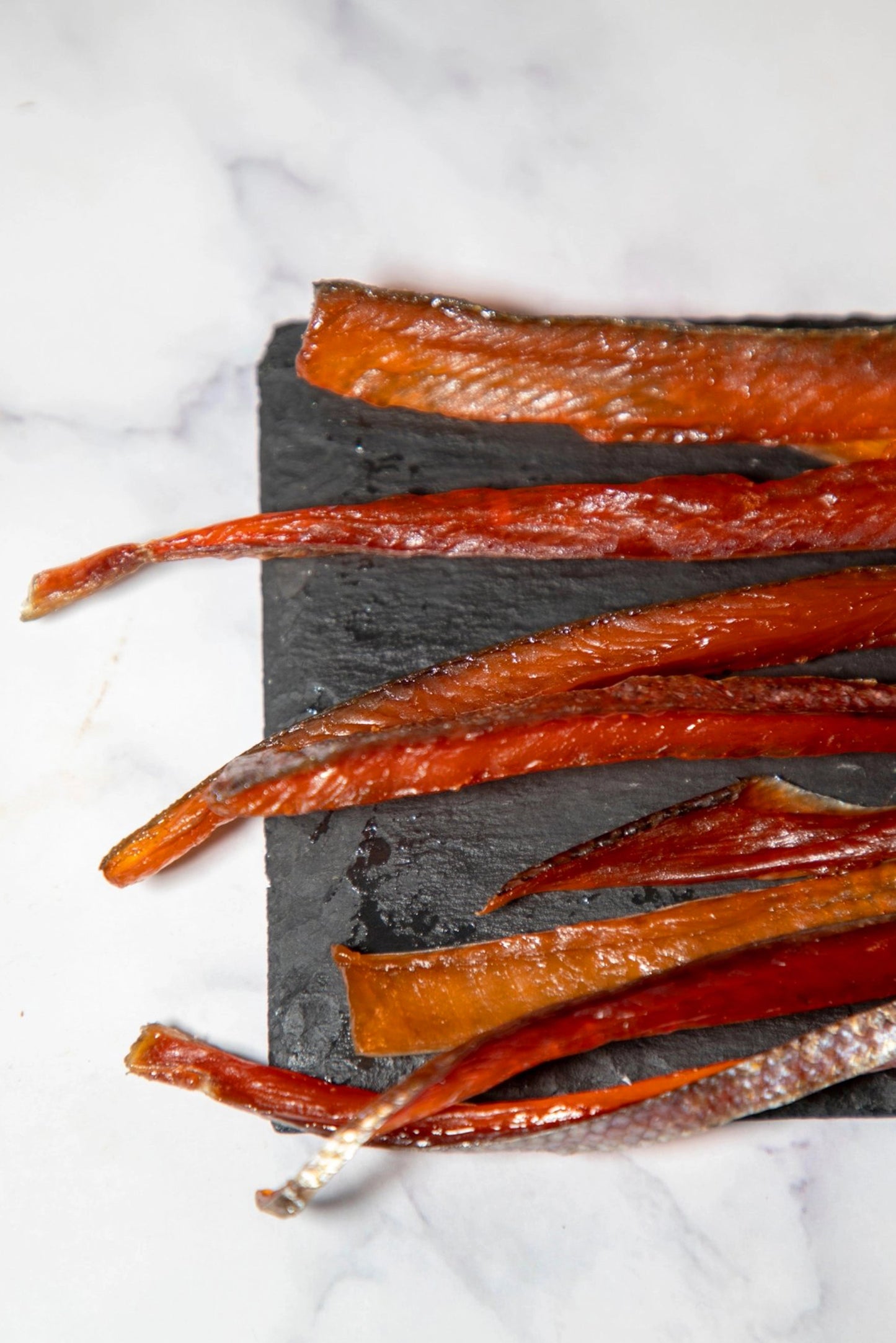
Trout Straws: Dried Fish Without the Bones
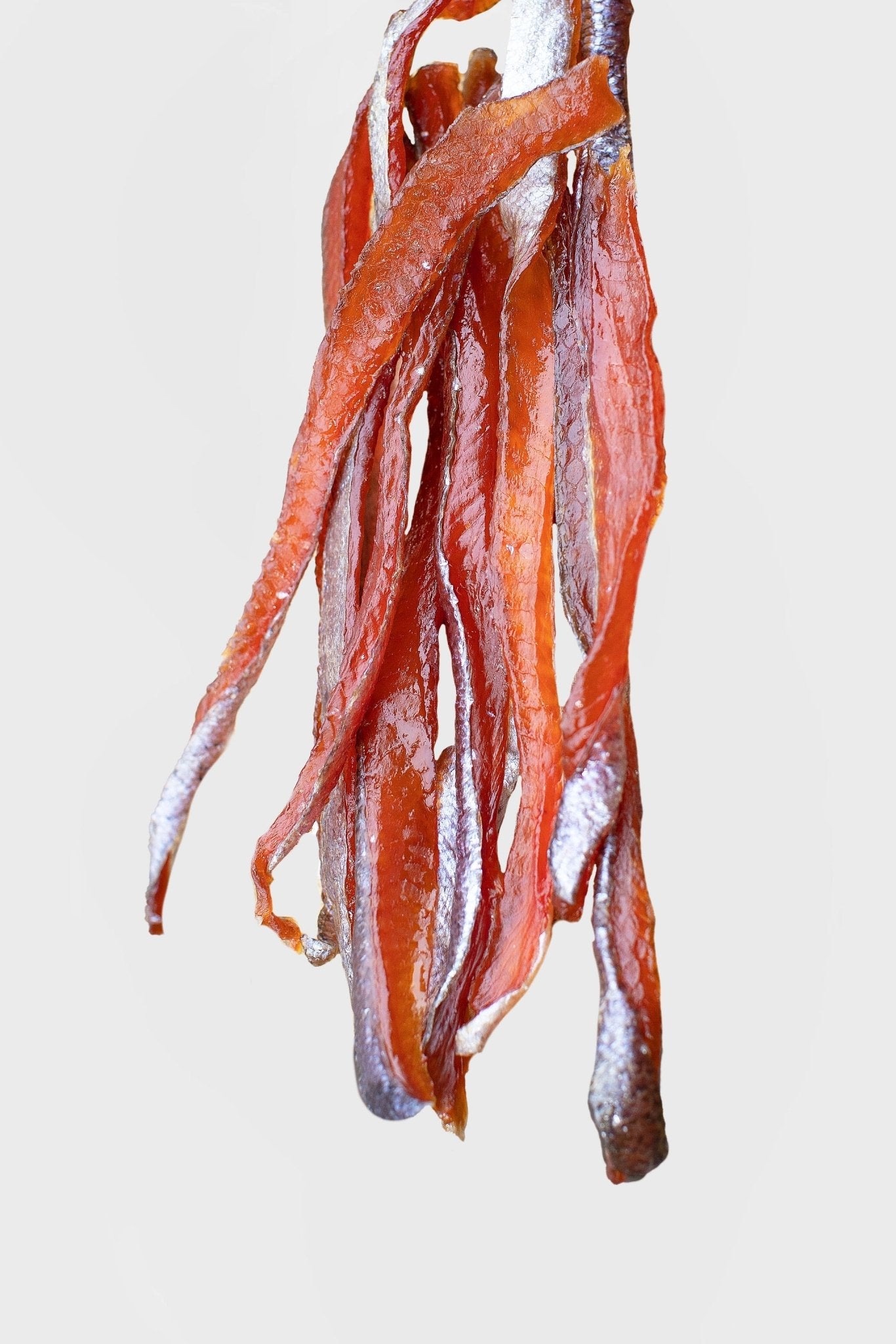
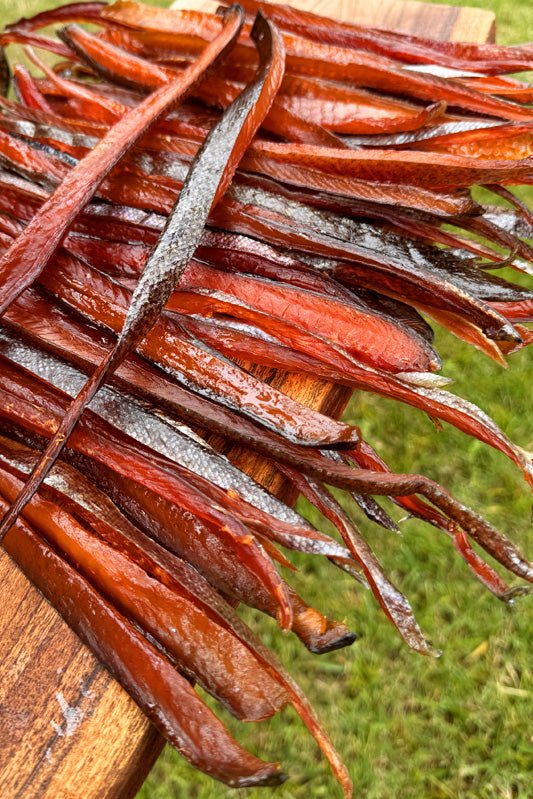
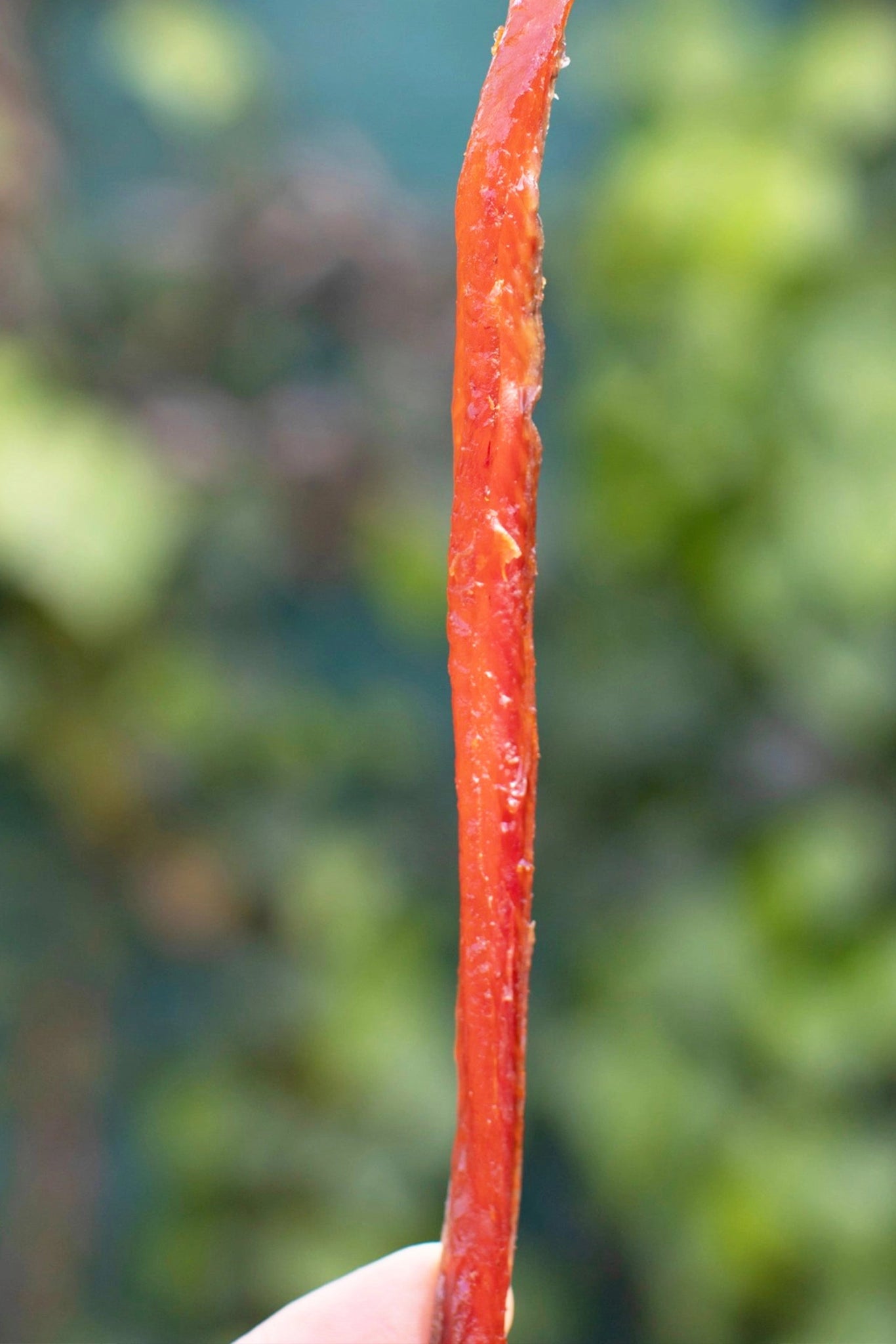
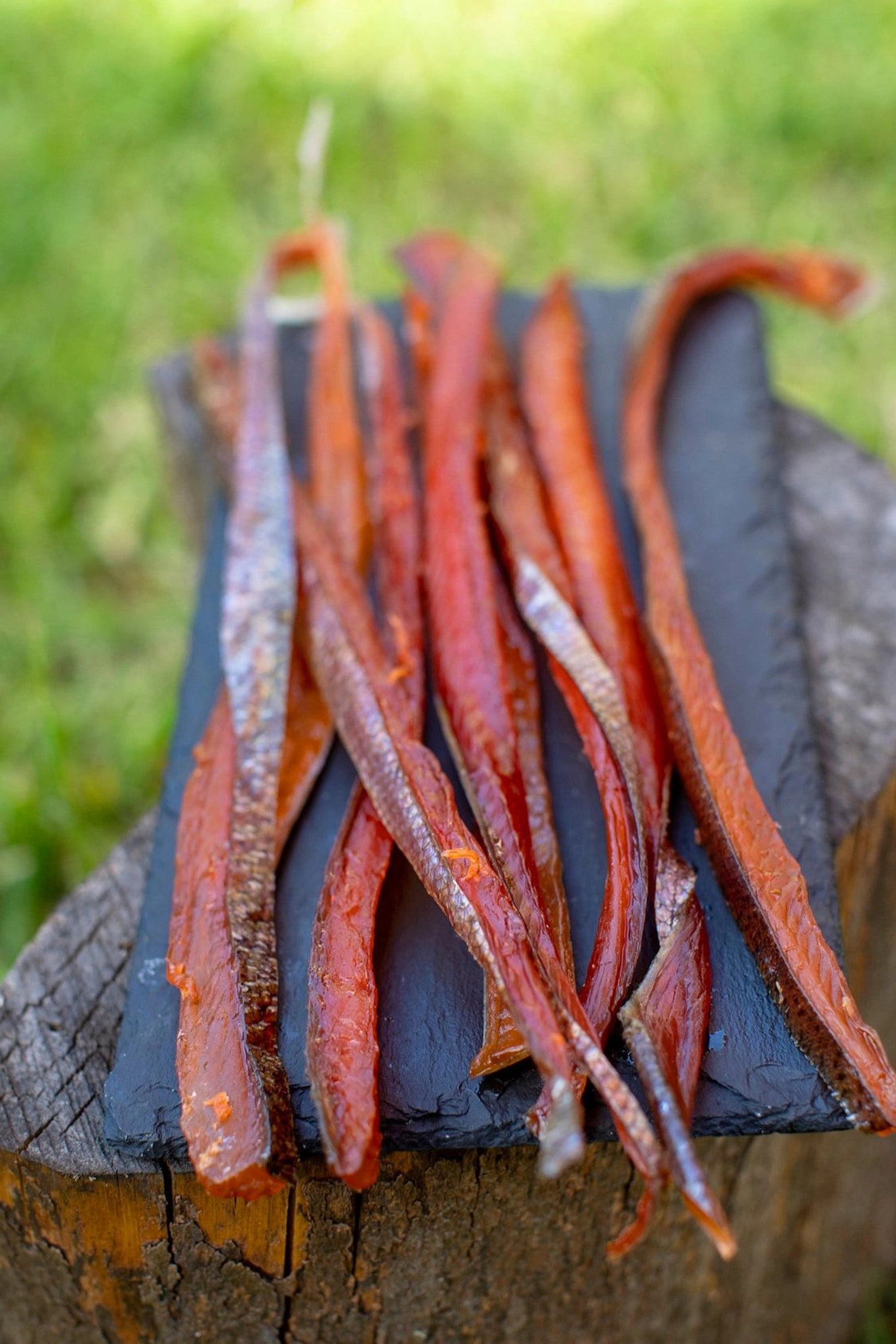
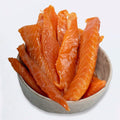
Thin strips of steelhead trout, cured and dried until they turn dense and pliable — a slow chew rather than a crisp one, with the flavour concentrating as you work through it. Richer than dried white fish because trout carries more fat, and completely boneless, which is what separates this from most dried fish on a shelf. You can eat a whole pack without stopping to pick anything out of your teeth.

How We Make Them
- Boned by hand. Every bone comes out before curing. This is the slowest step and the reason these eat the way they do.
- Cured and marinated. Salt and seasoning, measured so the trout stays in front.
- Dried for days. Long and low. Fast drying gives you something brittle; days give you the dense, tender chew.
- Nothing added. No preservatives, no dyes, no gluten.
How to Eat Them
- Straight from the pack. No preparation, no picking. That is the whole design.
- With cold beer. Salt, fat and a long chew against something cold. The pairing this was built for.
- On buttered bread. Dark rye, cold butter, strips laid across. It eats like a proper open sandwich.
- Chopped into salad. Scattered over greens or potato salad, where they behave like a savoury, chewy version of croutons.
- In a lunch box. They need no refrigeration for a day out and do not fall apart in a bag.

Keeping Them
Sealed and refrigerated at 32–39°F they keep one to three months. Once opened, press the air out and reseal — they will not spoil quickly, but they keep drying and stiffen over time. If a pack has gone firm, a few seconds of warmth brings the chew back.
Fuller guidance is in our storage guide.
Common Questions
Are they really boneless? Yes — every bone is removed by hand before drying. This is the single thing people notice first, and it is why these work for children and for anyone who has given up on dried fish because of the bones.
How chewy are they? Dense and yielding rather than tough. Closer to good jerky than to a dried fillet.
Are they salty? Present but not aggressive. The trout is rich enough that heavy salting would flatten it.
Is this the same as your trout jerky? Related, not identical. Straws are thin strips with a longer, drier chew; the jerky is cut thicker and stays softer.
Is it cooked? Not with heat — cured and dried, which preserves it on its own. Ready to eat from the pack.
Nutrition Facts
Serving Size 47 g
Amount Per Serving
| Calories 88 | Calories from Fat 14 |
| % Daily Value* | |
| Total Fat 1.5 g | 2% |
| Saturated Fat 0.3 g | 2% |
| Trans Fat 0 g | |
| Cholesterol 32 mg | 11% |
| Sodium 367 mg | 16% |
| Total Carbohydrate 2 g | <1% |
| Dietary Fiber 0 g | 0% |
| Sugars 2 g | |
| Protein 16.5 g | 33% |
Vitamin D 7% • Calcium 2%
Iron 3%
*Percent Daily Values are based on a 2,000-calorie diet.
Key Nutritional Highlights:
- High in protein: 16.5 g (33% DV)
- Low in fat: 1.5 g (2% DV)
- Good source of calcium & iron
- All-natural, no preservatives or additives
- Perfectly chewy with bold umami flavor