


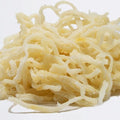
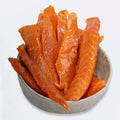

Koryushka is the Russian name for smelt, a small silver fish that smells like fresh cucumber when it comes out of the water. In St. Petersburg it gets a spring festival. On Sakhalin, where we grew up, it gets a hole in the ice and a short rod. In Los Angeles we salt it lightly, dry it whole for six days and ship it across the country.
The pack is Smelt (Dried Salted Koryushka): about eight fish, 4 to 7 inches each, 150 g (5.5 oz).
What koryushka is
Smelt are small fish that live in cold sea water and run up rivers to spawn. Two species matter here. European smelt (Osmerus eperlanus) is the Baltic fish. Rainbow smelt (Osmerus mordax) lives on both sides of the North Pacific and along the Atlantic coast of North America. The koryushka we caught as kids and the Canadian smelt we buy now both come from that second branch.
The English spelling wanders: koryushka, korushka, koriushka. All of them are the same word, корюшка. The fish rarely grows past 8 inches, is fatty for its size and goes off fast, which is why most of the world eats it fried the same day, and why people in Russia learned to dry it.
Why koryushka smells like cucumber
At a smelt market a bucket of fish smells like a sliced cucumber. The smell comes from a compound in the skin of the fresh fish, the same one that gives cucumber its aroma. It is strongest in the first hours out of the water. By the next day it fades, and a day-old smelt smells like any other fish.
The cucumber does not survive drying. The fat and the sweetness underneath it do. Open our pack and you get a salty, slightly sweet fish smell with a note of river water. We mention the cucumber anyway, because half the people who order koryushka from us remember that smell from home.
Spring fish in Petersburg, winter fish on Sakhalin
In St. Petersburg koryushka is a spring event. The fish runs up the Neva in April and May, the embankments smell of cucumber for two weeks, and the city holds a festival for it. People fry it in flour and eat it by the plate.
On Sakhalin it is a winter fish. The bays freeze, you drill a hole, drop a line with bare hooks and pull the fish up onto the ice, where it goes stiff within a minute. We caught it that way as boys, and the catch went onto the balcony to dry.
How dried smelt is made
The fish stays whole. Head, bones, skin, everything. Gutting a smelt this size would leave nothing to eat, and the bones soften in drying until you stop noticing them.
We salt lightly, enough to pull moisture and set the flesh, well under the hard-salted vobla you may remember from Russian markets. Then the fish hangs for six days in a room with controlled temperature and humidity. Six days is what a 5-inch fish needs to lose its water without turning into a cracker. Hotter, faster drying cooks the fat and the fish starts to taste of oil.
Two kinds of smelt go into this pack, and the season decides which one you get. Far Eastern smelt is leaner and firmer, the closest thing to the fish off the Sakhalin ice. Canadian smelt is fattier and softer. The checkout page says which one is in stock.
A fresh smelt smells like cucumber for about a day. A dried one keeps for three months. That trade is the whole reason koryushka gets dried.
How to eat dried smelt
With your hands, whole, head first or tail first, whichever way you were taught. Nobody fillets a dried koryushka. Some people pull the head off and eat the body in two bites. On Sakhalin the head goes in too.
The pairing is a cold lager. Small salty fish, a big cold beer and a table of people who all reach for the same pack. Our note on fish snacks and beer covers which of our dried fish sits with which beer.
Where to buy koryushka in the US
Fresh smelt is rare in this country. It shows up for a few weeks each spring in the Great Lakes states and in New England, mostly frozen or fried in a diner basket. You will never find it dried in a regular grocery store.
Dried koryushka sits in Russian and Eastern European stores, and the quality there depends on how long the pack waited on a shelf. We make ours in Los Angeles in small batches and ship to every state in a cold box with gel packs, so it arrives at fridge temperature. Details are on the shipping and pickup page.
Unopened, it keeps 1 to 3 months in the fridge. Once opened, wrap it in paper, keep it cold and finish it within two weeks. Our guide on how long smoked and dried fish lasts has the full table.
We dry koryushka because it was the first fish either of us ever caught, through a hole in the ice, mitten off, fingers numb. When we moved to Los Angeles we could not find it in any store, so we started making it ourselves. The six-day room is the closest we have come to that balcony back home.
